Portugal Bans Muslim Full-Face Coverings in Public Worn by Only a Few Women

Updated: Aug 26

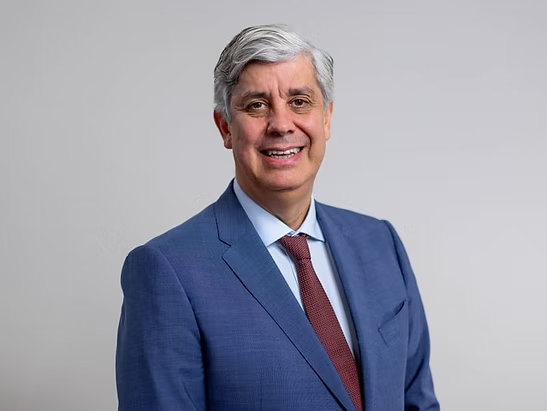
"It's not about burqas. Also, mind control is not security." Photo by Manuel Fernando Araújo/Lusa)
Getty images and others of Muslim women, thousands of kilometers away from Portugal, their eyes often masked with a mesh screen and their entire body covered in a burqa outer garment, tended to illustrate media stories about the much debated "burqa bill".
Why foreign photographs and not those of local media?
"A handful of Muslim women" in Portugal wear burqas, and those who wear niqabs (a veil over the nose and mouth) are "a dozen or so", noting that most women wear veils over their hair, said Sheikh David Munir, the imam, or prayer leader, of the Central Mosque of Lisbon, when the bill first came to light last year, according to Público (October 17, 2025).
"Wearing the burqa is not obligatory in Islam, nor is the niqab. A Muslim woman can have an uncovered face" and "can wear whatever clothes she wants of her own free will", so the question of women's rights doesn't arise in this matter.
"In practice, if we look at it, how many Muslim women have been caught with their faces covered committing something that jeopardized safety? Zero," he said, pointing out that there are also no cases in which Muslim women refused to identify themselves to the authorities if they were wearing a burqa or niqab.
"With so many serious problems we have in our country, with babies being born in ambulances or hospitals being closed because there are no doctors", instead of "dedicating our time to these situations and looking for solutions for them, we are discussing the clothing of a Muslim woman."
Nonetheless, the President of the Republic, António José Seguro, signed a decree of Parliament, on August 18, prohibiting the complete concealment of the face in public spaces. The bill will become law after publication in Diário da República.
The decree "establishes the safety and prevention rules relating to citizen identification to be adopted in public spaces", according to the website of the President of the Republic.
"An uncovered face constitutes a structuring dimension of social trust" and, obliging only women to hide it, represents "an asymmetry incompatible with the values of parity and equal dignity between men and women".
Law's Origin
The origin of this decree, approved by Parliament on July 17, 2026, lies in a bill from the Chega party which, during the plenary debate in October 2025, the party's president, André Ventura, said the bill was meant to prohibit "women wearing burqas in Portugal", specifically targeting immigrants, reported SIC Notícias (August 18).
At that time, Parliament approved the bill, in general, or in principle. If approved in general, a proposal moves on to the next phase -- the detailed analysis -- and only then, if it passes again, would it be submitted for a final overall vote, reported RTP Notícias (June 19).
The measure generated political and social debate, with parties divided over arguments of constitutionality; individual and religious freedom; security, and integration, reported SIC Notícias. Immigration-tightening proposals also had been debated at this time, including the Foreigners' Law, which was signed in October 2025.
Nine months after the burqa law had been approved in principle, the decree, amended in detail, was approved in a final overall vote on July 17, with votes in favor from PSD (Social Democratic Party), Chega, CDS (People's Party) and IL (Liberal Initiative), and against from PS (Socialist Party), Livre, PCP (Portuguese Communist Party), BE (Left Bloc) and JPP (Juntos Pelo Povo), and abstention from PAN (People Animals Nature), reported SIC Notícias.
In the May 2025 snap legislative election, the Democratic Alliance (AD), which includes PSD (Social Democratic Party), won the majority of seats (91), thereby becoming the governing party, while Chega ("Portugal for the Portuguese") won 60 seats, and PS (Socialist Party) 58. There are 230 seats in total.
"Great Social and Cultural Sensitivity"
"We are dealing with a matter of great social and cultural sensitivity, where it is extremely difficult to define boundaries and to value rights and duties in a balanced way," according to the website of the President of the Republic.
"Taking into account these assumptions and the content of the decree, after the legislative changes introduced, the President of the Republic opted for its promulgation.
"Social integration, non-discrimination based on gender, and the security resulting from similar decisions by the European Court of Human Rights underpin this decision.
"The President of the Republic shares this Court's conviction that the face is central to human identity and communication, serving as a minimum element for mutual recognition among fellow citizens.
"And to admit that women, and only women, must hide their entire faces implies an asymmetry incompatible with the values of parity and equal dignity between men and women, values that shape European democracies.
"On the other hand, in a free society like ours, each person should be able to live their identity and beliefs within a set of common rules which provide a "common experience", a concept accepted by the European Court of Human Rights.
"For the President of the Republic, the uncovered face constitutes a structuring dimension of social trust, a characteristic of Portuguese society. Daily coexistence is based on mutual recognition and the possibility of establishing a direct relationship between people. This common rule is indispensable to life in a democratic, free and plural society. It is a rule of coexistence among human beings with equal dignity."
Fines, Exceptions
Violation of the law "constitutes an administrative offense punishable by a fine of 150 euros to 750 euros in cases of negligence, and 400 euros to 3,000 euros in cases of intent", reported SIC Notícias.
There are exceptions.
The law "does not apply whenever the concealment is duly justified by health reasons or professional, artistic, entertainment or advertising reasons" and "is not applicable on aircraft, diplomatic and consular premises, as well as in places of worship or other sacred places", nor for "reasons related to security or due to weather conditions or whenever this is permitted by law".
Party Negotiations
In June, the PSD (Social Democratic Party) presented a replacement bill for the original Chega proposal, focusing on the security reasons inherent in the prohibition of face coverings, in order to downplay the issue of Islamic burqas, reported Observador (July 9).
At that point, Chega threatened to vote against the changes proposed by the Social Democrats. But then, André Ventura's party presented a new substitute text, aligning itself with the positions of the Social Democrats, who were trying to prevent the legislation from being challenged on constitutional grounds, particularly regarding religious freedom.
The vice president of the PSD parliamentary group, António Rodrigues, said that he would withdraw the substitute text because the most recent proposals from Cega represented a significant convergence from a political point of view.
Among other changes, Chega adopted a new name of its own project. Where it previously read "prohibits the concealment of the face in public spaces except for certain exceptions", it now reads "prohibits the concealment of the face in public spaces for reasons of security and public order".
The final text presented by the Committee on Constitutional Affairs, Rights, Freedoms and Guarantees stipulates that "it is prohibited to coerce any person to conceal their face for reasons of gender, religion, age or origin".
In the initial version of the bill, in cases of forced concealment of the face, Chega had advocated for the application of the crime of coercion, with a prison sentence of up to three years. And this sentence would be increased by one-third when the victim was a minor, reported Observador. These stipulations were discarded in the final version.
The PSD insisted that the legislation is intended to address security issues in public spaces. However, in their political speeches, Members of Parliament emphasized other reasons.
"What is clearly at stake is the dignity of women," said Rui Rocha, IL (Liberal Initiative).
"We cannot allow the concealment of faces to enable two things: criminal activity and the oppression of women," said João Almeida, CDS (People' s Party).
Madalena Cordeiro, Chega, said:
"We must stop pretending that all cultures are equal, even when some deny fundamental principles of our civilization. We cannot allow, in the name of a false multiculturalism, the return to symbols which signify silence and oppression."
Imam's Reaction to the Law
After President Seguro signed the bill, Sheikh David Munir, imam of the Central Mosque of Lisbon, said that the law must be respected by men and women.
"According to Islam, if a woman has her face uncovered, it is not a crime. She is not transgressing God's law. Therefore, according to the law which has been enacted, we agree that, in public spaces, men and women must have their faces uncovered for security reasons," reported TSF Notícias (August 18).
He added:
"This idea of considering a woman submissive, an inferior woman, just for wearing the burqa, is a lie in our country.
"Moreover, if there are 20 women in our entire country who wear burqas, it's a miracle."

Comments